
What Is Sintered Stone?
A Complete Guide for Architects, Builders and Designers
Sintered stone is one of the most advanced surface materials available in modern architecture. With the recent ban on engineered stone in Australia, it has quickly emerged as a preferred alternative for kitchens, bathrooms, flooring and architectural cladding.
But what exactly is sintered stone, and why is it becoming so widely specified?
How Sintered Stone Is Made
Sintered stone is produced using natural minerals such as quartz, feldspar and clay.
These minerals are subjected to extreme pressure and temperatures exceeding 1200°C, replicating the natural geological processes that form stone deep within the earth.
The process compresses the minerals into a dense, ultra-compact surface that delivers exceptional durability and stability.
Unlike many engineered materials, sintered stone does not rely on polymer resins or binders to achieve its strength.
Key Performance Characteristics
Because of its manufacturing process, sintered stone offers several advantages over traditional surface materials.
Exceptional Durability
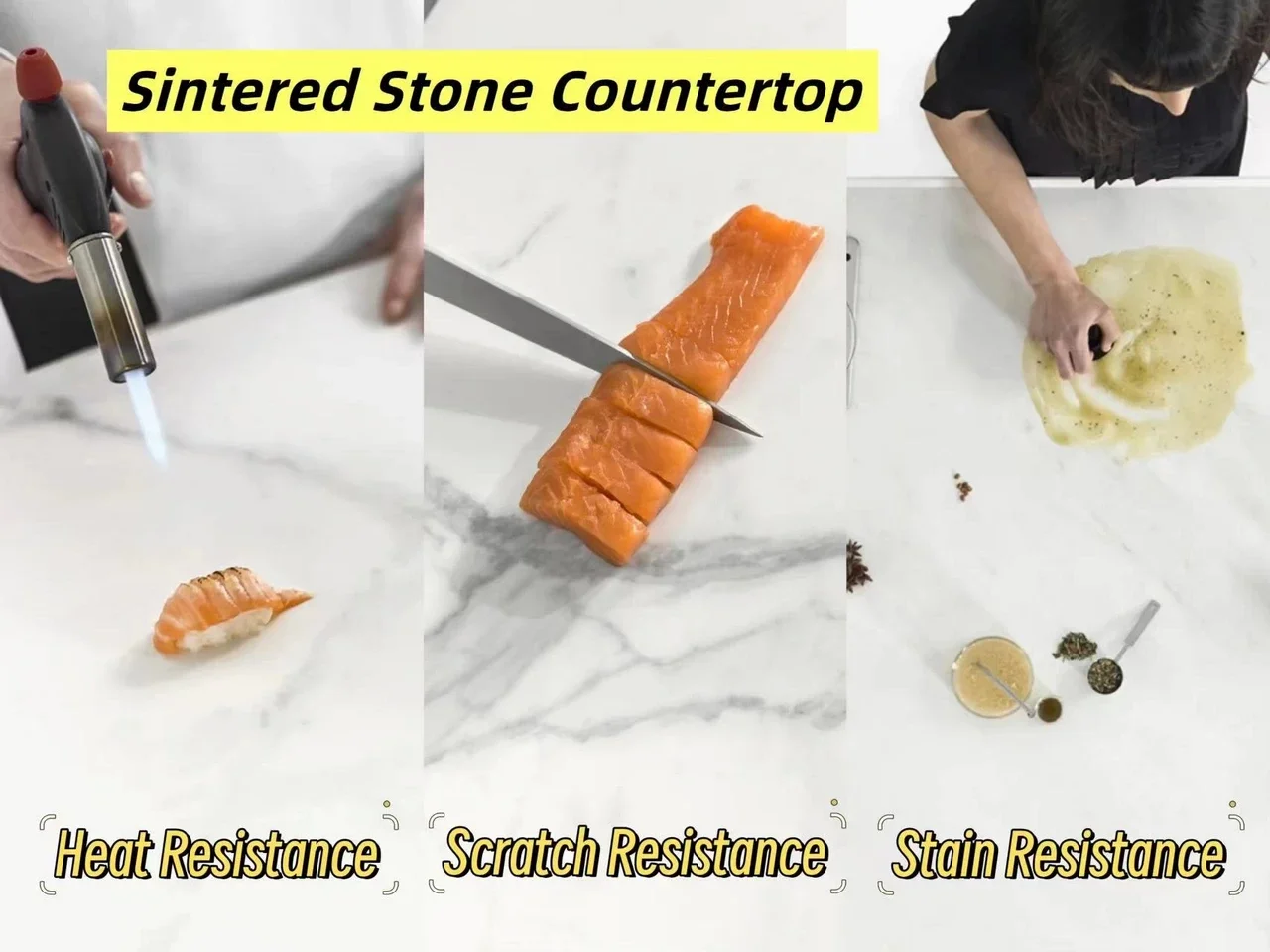
Sintered stone is extremely dense and resistant to scratches, stains and impact damage.
Heat Resistance
The material can withstand high temperatures without burning or discoloration, making it ideal for kitchen surfaces.
UV Stability
Unlike some surface materials, sintered stone does not fade when exposed to sunlight. This allows it to be used in outdoor applications such as facades and exterior kitchens.
Non-Porous Surface
The material is highly resistant to water absorption, helping prevent staining and bacterial growth.
Low Maintenance
Sintered stone surfaces require minimal sealing or maintenance compared with many natural stones.
Applications in Architecture
Sintered stone is widely used in both residential and commercial projects.
Common applications include:
Kitchen benchtops
Bathroom vanities
Flooring
Wall cladding
Building facades
Outdoor kitchens and furniture
The material is available in large format slabs, allowing designers to create seamless architectural surfaces.
Sintered Stone in Australia
With the ban on engineered stone, many architects and builders are transitioning to sintered stone as a safer alternative.
The material provides similar aesthetic flexibility while offering improved heat resistance, UV stability and durability.
Kingsun Sintered Stone from NovaKore
NovaKore supplies premium sintered stone manufactured by Kingsun, a leading producer of advanced architectural surfaces.
The Kingsun range offers:
Large format slabs
Contemporary architectural finishes
High durability
Compliance with modern building requirements
For architects and designers seeking reliable alternatives to engineered stone, sintered stone provides a future-ready material solution.
Best Benchtop Materials After the Engineered Stone Ban
The Australian ban on engineered stone has significantly changed the way kitchens and architectural surfaces are specified.
While engineered stone dominated the market for years, several alternative materials now provide excellent performance and design flexibility.
Here are some of the most widely used benchtop materials today.
1. Sintered Stone
Sintered stone is quickly becoming one of the most popular replacements for engineered stone.
Manufactured using high heat and pressure to fuse natural minerals together, sintered stone offers exceptional durability and heat resistance.
Benefits include:
Highly scratch resistant
Heat and UV resistant
Low maintenance
Suitable for indoor and outdoor applications
NovaKore’s Kingsun sintered stone range offers architects and builders a modern, high-performance surface option.
2. Natural Stone
Natural stone such as granite, marble and quartzite remains popular for premium residential and commercial projects.
These materials provide unique natural patterns but often require sealing and ongoing maintenance.
3. Porcelain Slabs
Porcelain surfaces are lightweight and highly resistant to heat and staining.
Advances in printing technology allow porcelain slabs to replicate the appearance of marble, stone or concrete.
4. Solid Surface Materials
Acrylic solid surface materials provide seamless installations and can be shaped into curved forms.
They are frequently used in commercial environments such as healthcare and hospitality.
5. Stainless Steel
Stainless steel remains a practical option for commercial kitchens due to its durability and hygiene properties.
However, it is less commonly used in residential interiors.
Choosing the Right Surface
Selecting the right benchtop material depends on several factors including durability, maintenance requirements and design preferences.
Among the available options, sintered stone offers one of the best combinations of performance, durability and aesthetic flexibility.
Low-Silica Building Materials for Architects
The growing awareness of silica-related health risks has prompted significant changes within the construction industry.
With engineered stone now banned in Australia, architects and builders are increasingly seeking low-silica or silica-free materials that can be safely specified in residential and commercial projects.
Why Silica Is a Concern
Crystalline silica is a mineral commonly found in materials such as sand, stone and concrete.
When these materials are cut or ground, fine silica dust can be released into the air. Prolonged exposure to this dust can lead to silicosis, a serious and irreversible lung disease.
This risk was a key factor behind Australia’s decision to prohibit engineered stone products.
Safer Material Options
Several materials now offer safer alternatives for architectural surfaces.
Sintered Stone
Sintered stone surfaces use natural minerals that are compressed and fired at extremely high temperatures to produce durable slabs.
They offer excellent durability and are widely used for benchtops, flooring and cladding.
Porcelain
Porcelain slabs provide strong resistance to heat and stains and are available in large format sizes suitable for architectural applications.
Natural Stone
Materials such as granite and quartzite remain popular for high-end architectural surfaces.
Solid Surface Materials
Acrylic composite surfaces are commonly used in commercial interiors where seamless finishes are required.
Designing for the Future
The move toward low-silica building materials represents a major shift in the construction industry.
Architects now have an opportunity to specify materials that combine safety, performance and long-term durability.
Sintered stone in particular offers a modern solution that meets the demands of contemporary architecture.
NovaKore Architectural Surfaces
NovaKore supplies premium architectural materials designed to meet the needs of the Australian construction industry.
Our Kingsun sintered stone range provides architects and designers with a durable and compliant alternative to engineered stone.
With the industry transitioning toward safer materials, NovaKore is committed to supporting the next generation of architectural surfaces.